
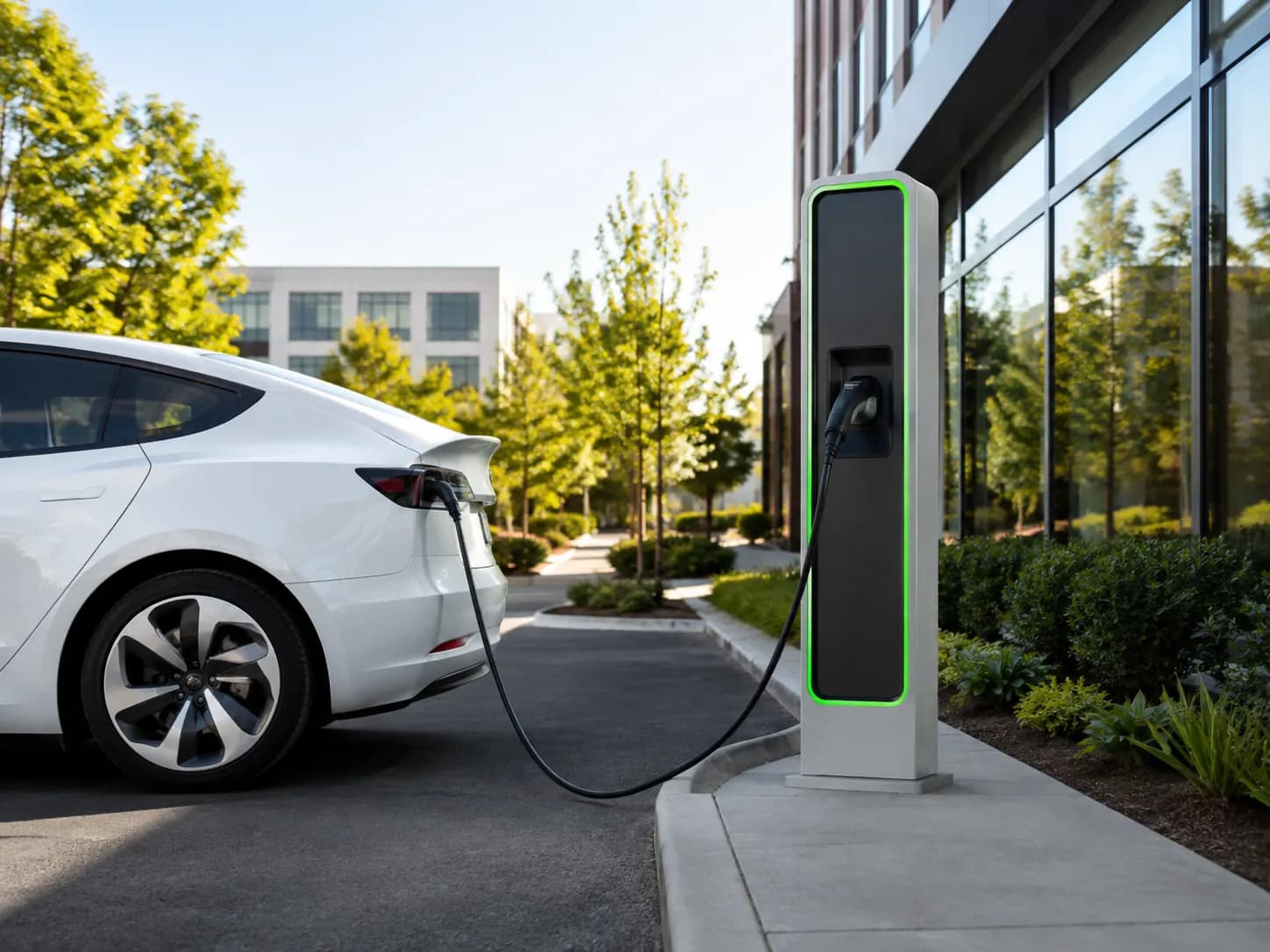
The best charger is not automatically the fastest one. A useful charging design starts with who will charge, how far vehicles travel, how long they remain parked and what electrical capacity is available. It then combines the right charger mix with safe installation, controls and an operating plan.
Define vehicles and charging behaviour
For a home, estimate daily distance, parking hours and whether charging can occur overnight. For a workplace, consider employee and visitor dwell times. For a fleet, use route schedules, return times, battery state and departure-readiness targets. The daily energy requirement is often more informative than the vehicle's maximum charge rate.
Choose AC and DC charging deliberately
AC charging is commonly suited to longer parking periods and can reduce equipment and connection requirements. DC charging can deliver energy faster but generally requires more electrical capacity, equipment space, thermal management and investment. Mixed sites may use several AC points plus selected higher-power chargers for vehicles with short turnaround times. Vehicle compatibility must be checked.
Assess the electrical supply
Review sanctioned load, transformer and panel capacity, existing peak demand, cable routes, voltage conditions and protection. A snapshot inspection is not enough for a busy commercial site; load data can reveal when spare capacity exists. Managed charging can share a defined power limit among vehicles, reduce coincident demand and sometimes defer an expensive supply upgrade.
Design the physical site
Account for bay dimensions, cable reach, bollards, wheel stops, drainage, lighting, signage, pedestrian movement and accessible use. Protect equipment from vehicle impact and unsuitable weather exposure. Plan trenching or conduits for both power and communication. For homes and housing societies, clarify parking rights and the route from the meter or distribution panel before installation.
Select software and user controls
Decide whether the site needs simple plug-and-charge operation, authorised users, tariffs, reservations, reimbursement, remote monitoring or public discovery. Check network dependence, data access, software fees, payment settlement and support. Fleets may also need charger status linked to vehicle schedules. The operating workflow should be tested with the people who will manage it.
Prepare for growth and maintenance
Install spare conduit, panel ways, network capacity and a scalable controls architecture where practical. Expansion does not always require every future charger on day one, but the civil and electrical backbone is cheaper to consider early. Define inspection, cleaning, fault response, software updates and who users contact when charging fails.
Practical checklist
- Document vehicles, daily energy, dwell time and departure deadlines.
- Assess supply, transformer, panel and peak-load capacity.
- Compare AC, DC and managed-charging options.
- Design bays, protection, accessibility, drainage and cable routes.
- Confirm software, payment, monitoring, support and expansion requirements.
Frequently asked questions
Do I need the fastest charger my vehicle accepts?
Usually not. The right power depends on energy needed before departure, parking time, budget and available electrical capacity. A lower-power charger can fully meet many overnight or workday needs.
Can several chargers share one power limit?
Yes, compatible load-management systems can allocate available power across connected vehicles. The strategy should reflect user priority and departure requirements.
Should solar and a battery be added with EV charging?
They may help in the right load and tariff context, but they are separate design decisions. Model charging time, solar coincidence, grid capacity and battery losses before combining the systems.
This guide provides general information, not a site-specific technical, financial or legal recommendation. Site conditions, tariffs, regulations, incentives, product terms and lender policies can change. Verify current requirements and obtain a project-specific assessment before deciding.