
Keep critical operations running
Support selected loads when the grid fails, within the designed power and energy capacity.
BUSINESS & INDUSTRIAL ENERGY STORAGE
WHY BUSINESSES CONSIDER BESS
A battery is valuable only when it solves a defined problem. For one site that may be production continuity. For another it may be peak management, better solar utilisation or preparation for future expansion.
Support selected loads when the grid fails, within the designed power and energy capacity.
Discharge strategically when site demand is high, subject to the tariff and operating profile.
Store suitable surplus generation for later instead of relying only on real-time solar use.
Create a controllable energy asset that can respond to changing loads and business priorities.
BESS IN DAILY BUSINESS
Keep PLCs, controls, servers, emergency systems or selected machinery operating while non-critical loads remain off.
Possible value: less disruption, scrap and restart timeA battery may bridge short interruptions or reduce unnecessary generator starts. Longer outages can still be supported by the generator.
Possible value: smoother continuity and lower generator useWhen solar generation exceeds useful daytime demand, storage may make part of that energy available later.
Possible value: improved solar utilisationInterval data can reveal whether a controlled battery discharge may help manage short high-demand periods.
Possible value: tariff-dependent demand managementOFFICIAL TATA POWER BATTERY STORAGE RANGE
Start with the operating objective, load profile and site conditions. Final capacity, architecture and scope are confirmed through engineering.
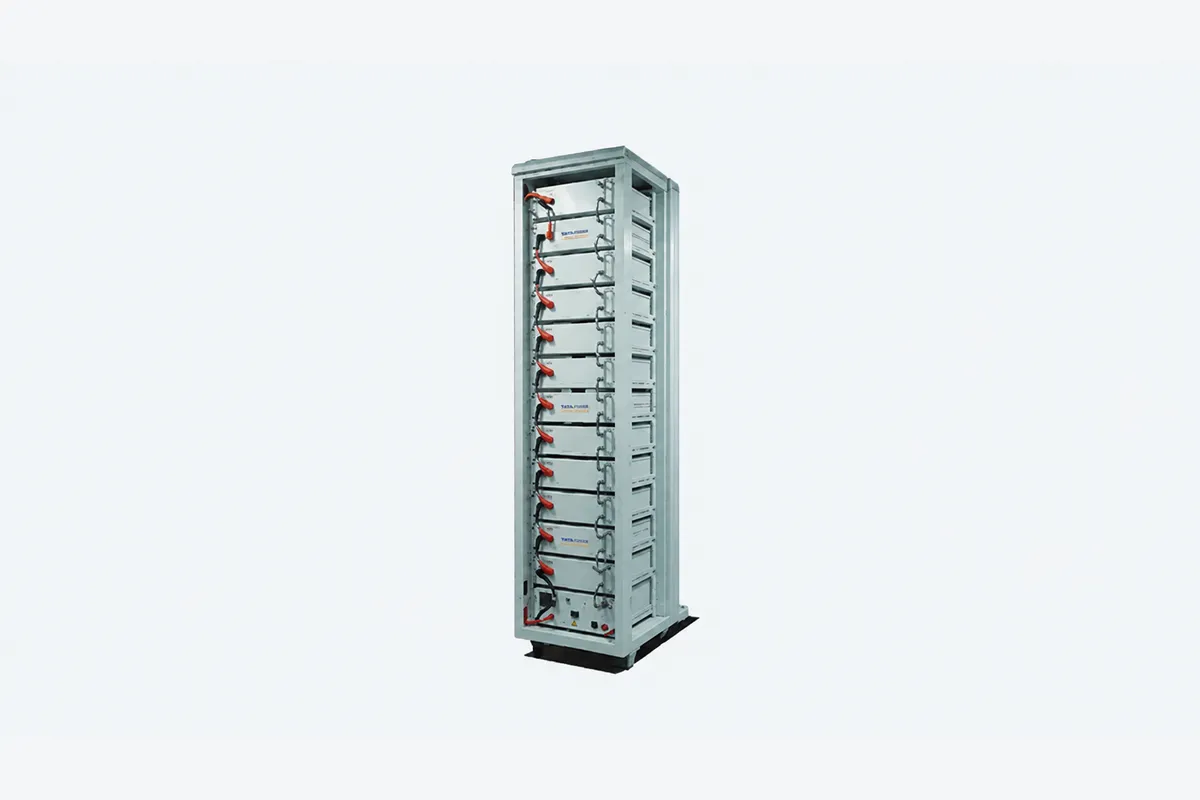
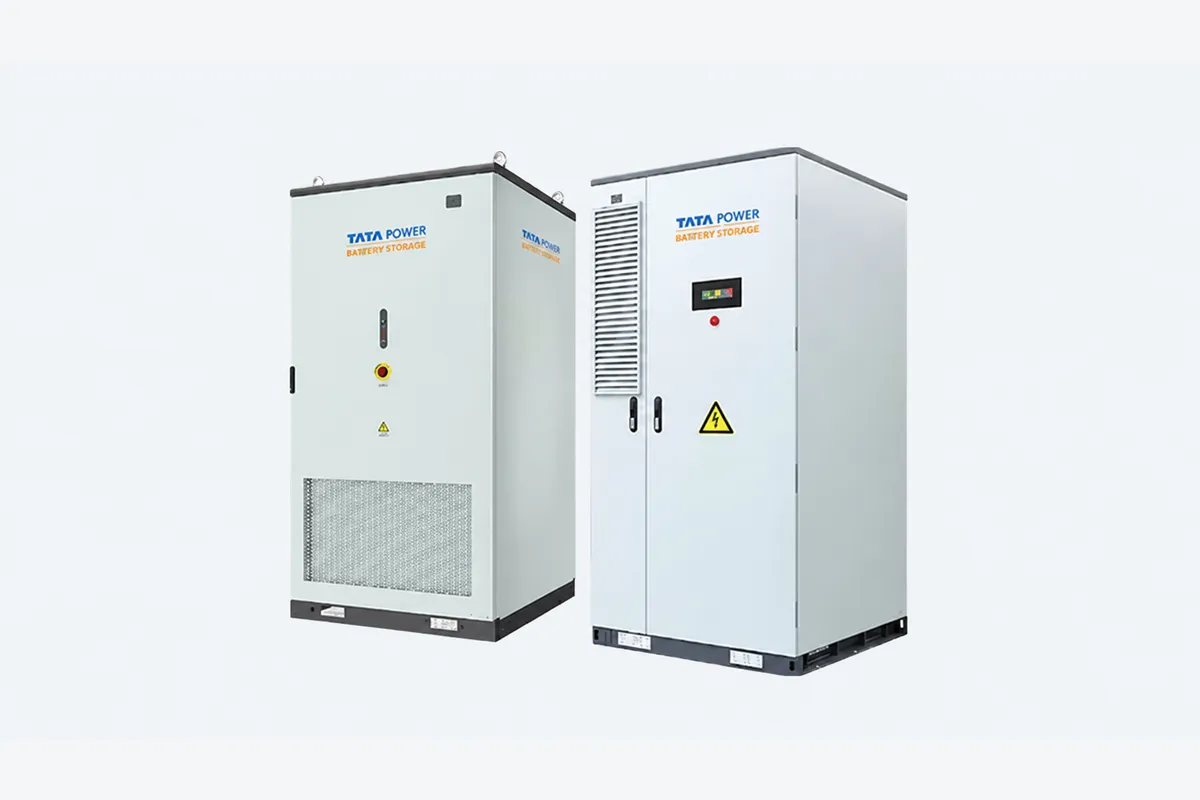
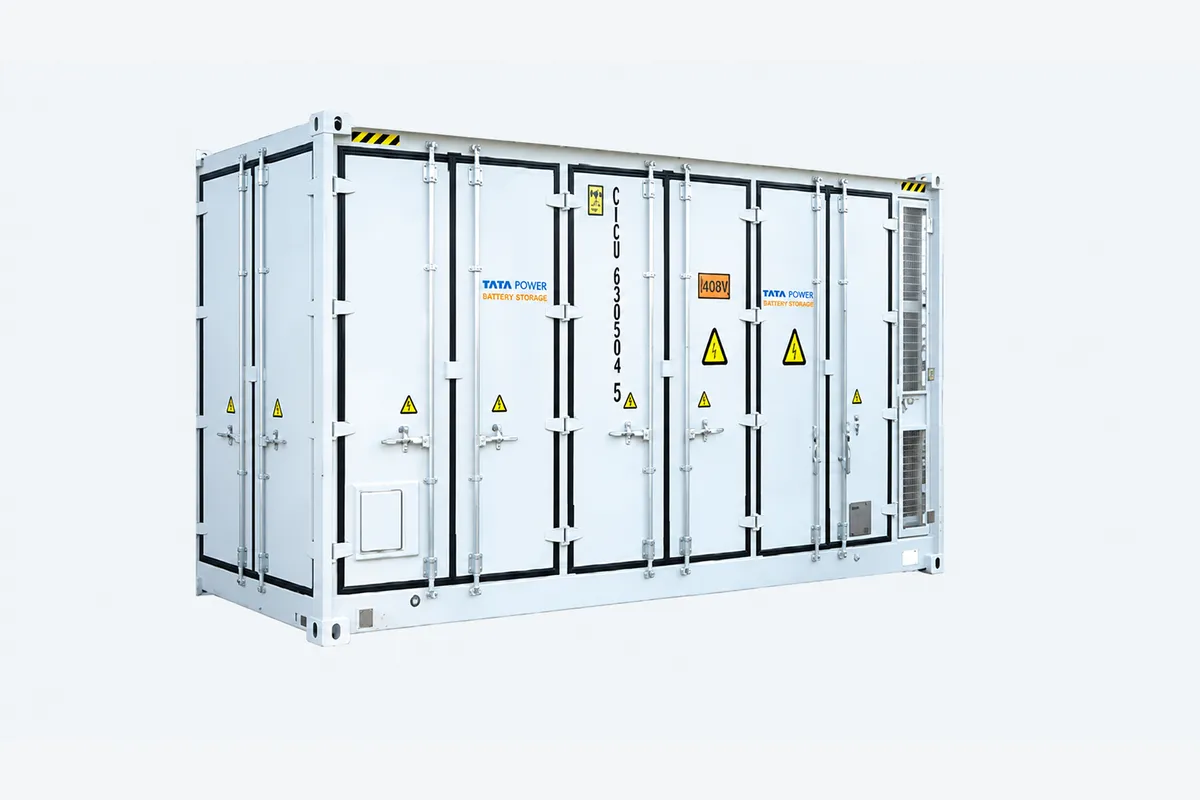
Specifications are indicative and subject to final system selection, engineering and commercial proposal. Financing, where available, is subject to eligibility and partner approval.
Choose the answers closest to your situation. This is an initial direction, not a final system design.
THREE COMMON STARTING POINTS
Storage can be planned with new solar, retrofitted around an existing plant or assessed independently. Each route has different integration questions.
Review generation, export, inverter arrangement, protections and the load profile before deciding how storage should connect.
Design the solar array, battery, inverter, controls and operating modes as one coordinated energy system.
Use storage for resilience or load management where the tariff and operating pattern support a clear case.
HOW BESS WORKS
Grid, solar or another approved source charges the system.
→Stores a defined amount of usable energy, measured in kWh.
→Manage charging, discharge, power flow and operating priorities.
→Receive power according to the selected mode and system limits.
How much equipment the system can support at the same time.
How much usable energy is available and, together with the load, how long it may run.
When the battery charges, when it discharges and what the system prioritises.
WHERE VALUE CAN COME FROM
More than one use case may be possible, but they can compete for the same stored energy. The operating strategy must decide what takes priority.
Keep chosen production, process, IT, lighting or safety loads available through short grid interruptions.
Best when downtime has a measurable business cost.Charge from available solar and use that energy later, based on the system design and operating strategy.
Best when solar production and consumption occur at different times.Support the site during selected high-demand periods to help manage demand-related costs.
Best when interval data shows short, repeatable peaks.A suitably engineered system may support voltage, frequency or transition requirements for selected loads.
Requires detailed electrical and load assessment.BUILD THE BUSINESS CASE
A responsible feasibility study separates measurable financial benefits from resilience benefits. It also tests whether those benefits can occur together without compromising the backup reserve.
Estimate lost output, wasted material, restart time, delayed orders and labour impact from a typical outage.
Ask: What does one hour of interruption cost?Review fuel, servicing, low-load operation, start frequency and the outages that still require longer generator support.
Ask: Which generator runs could storage realistically avoid?Compare solar generation, export and consumption by time of day before assigning savings to a battery.
Ask: Is usable solar regularly available to charge it?Use interval demand and the applicable tariff to evaluate peak management or time-related energy value.
Ask: Does the tariff reward the intended operating strategy?Proceed only when the proposed operating strategy, measurable benefits, resilience value, lifecycle cost and technical constraints are understood together.
RIGHT-SIZE THE INVESTMENT
A dependable design separates power, energy, outage expectations and commercial operation. Oversizing can weaken the business case. Undersizing can disappoint during real operation.
Which machines and systems must continue, and which can stop?
What must run together, including starting current and expansion headroom?
Minutes for safe shutdown, hours of continuity or support until a generator starts?
Bills, interval demand, solar generation, export and outage history.
Backup reserve, solar charging, peak control and recharge priorities.
Space, temperature, fire safety, access, electrical integration and approvals.
WHAT A GOOD PROPOSAL SHOULD SHOW
Final design, standards, approvals and safety provisions must be selected for the specific site, capacity, equipment and applicable regulations.
SAFETY, MONITORING & SUPPORT
Electrical protection, isolation, enclosure, access, thermal management, detection and emergency response must suit the selected system and site.
Track system status, alarms, power flow, state of charge and operating performance through the agreed monitoring scope.
Receive operating modes, settings, warranties, drawings, commissioning records, emergency procedures and maintenance requirements.
Clarify remote support, preventive maintenance, response arrangements, spare parts and responsibilities across suppliers.
BUSINESS OWNER QUESTIONS
Not automatically. A practical design normally prioritises critical loads. The battery power rating, stored energy, starting currents, operating sequence and required backup duration must all be checked.
Share your bills, operating hours, solar information and critical-load priorities for an initial technical discussion.